
China-MENA Relations: Synopsis
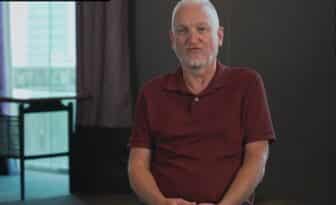
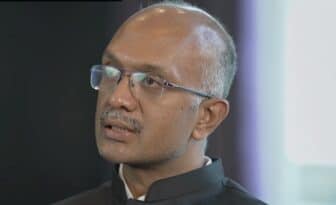
China’s role in the Middle East and North Africa is expanding, but not necessarily in the ways often assumed. In this episode of Picking Up, Where We Left Off, Hollings Center Executive Director Michael Carroll speaks with Robert Mogielnicki and Jesse Marks about China–MENA relations, with particular attention to the Gulf, including U.S.–China competition, regional security, economic investment, and the rapid growth of artificial intelligence.
The discussion examines China’s continued emphasis on economic stability and commercial opportunity rather than replacing the United States as the region’s primary security partner. Recent conflicts have also highlighted the limits of relying on outside powers. Regional states, particularly in the Gulf, are increasingly seeking greater strategic autonomy—strengthening their own ability to manage security and economic priorities while maintaining important relationships with the United States, China, and other partners rather than simply choosing between competing blocs.
Economic ties remain at the center of China–MENA relations. China continues to be an important market for regional energy exports, while infrastructure projects, sovereign wealth fund investments, and broader financial ties provide additional avenues for cooperation. At the same time, China has sought to reduce its exposure to regional instability by diversifying its own energy supplies and avoiding excessive dependence on individual producers.
Technology may prove to be an even more consequential area of competition. Saudi Arabia and the UAE are investing heavily in AI infrastructure while increasingly relying on U.S. hardware, software, and advanced semiconductors. The emerging contest is therefore about more than individual technologies: it is about which country can provide regional states with the most competitive and sustainable AI ecosystem. Looking ahead, the guests argue that China is unlikely to replace the United States in the Middle East and North Africa, but Beijing will continue looking for opportunities to expand its economic, technological, diplomatic, and selective security engagement as regional governments pursue increasingly independent strategies.
Guests
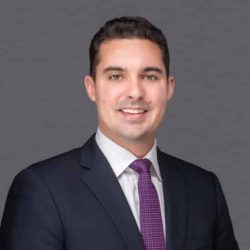
Dr. Robert Mogielnicki is the founder of Polisphere Advisory and a Middle East advisor with Teneo. He is also a non-resident fellow with the Arab Gulf States Institute, the Sultan Qaboos Cultural Center research fellow for 2025–2026, a columnist with Arabian Gulf Business Insight, and a term member of the Council on Foreign Relations.

Jesse Marks is a research scholar at the Center for Arab and Islamic Studies at the Australia National University where he is researching AI sovereignty in the Middle East as well as Sino-Arab relations. He previously worked as a Middle East policy advisor at the Department of Defense’s Middle East policy office and is a regular commentator on Middle East geopolitics.